⚠️ Timetables, opening hours, prices and access conditions may change without notice, for reasons beyond our control (season, weather, decisions by operators, venues or local authorities). Before every trip, check the information with the relevant authorities and service providers. Entry requirements and local rules (reserves, quotas) are subject to the same caveat.
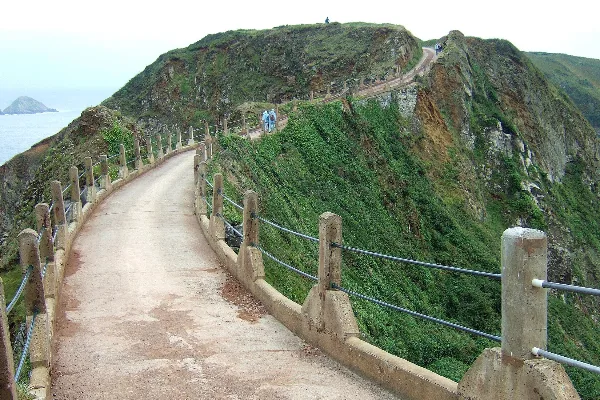
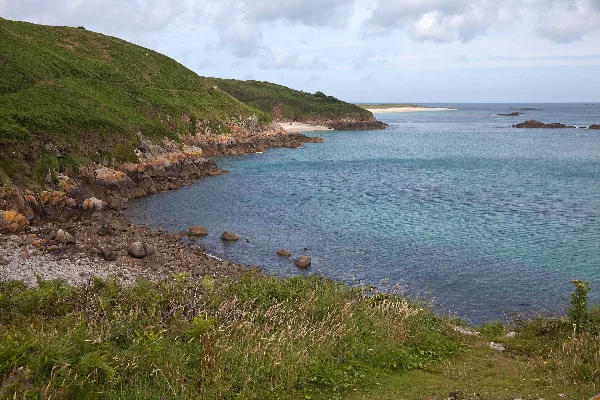
Jersey, the largest of the Channel Islands (116 km²), is a British territory just 22 km from the Normandy coast and 160 km from England. This British Crown Dependency has its own currency, its own laws and a unique identity blending French and British cultures. Saint Helier, its lively capital, is home to colourful markets and a vibrant nightlife. Mont Orgueil Castle, a medieval fortress perched above Gorey harbour, has watched over the east of the island for 800 years. Jersey's beaches — St Brelade's Bay, St Ouen's Bay (5 km of wild sand), Grève de Lecq — are among the most beautiful in the British Isles. Food lovers will enjoy the oysters, Jersey lobster and Jersey Royal potatoes. The island is also a well-known tax haven, home to many charming residences.
British, Norman, and neither
Jersey is not in the United Kingdom: it is a Crown Dependency, was never part of the European Union, and has its own parliament, its own laws and its own currency. The island is a fragment of the Duchy of Normandy that stayed loyal to the King of England in 1204 — hence parish names in French, a local Norman language, Jèrriais, and a body of law still threaded with Norman terms.
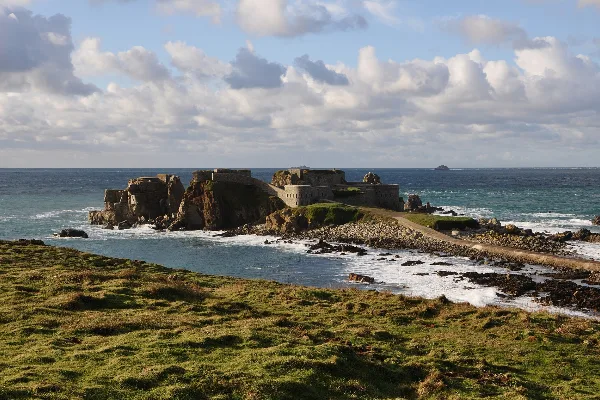
The most spectacular natural fact here never shows in photographs: Jersey has one of the largest tidal ranges in the world, up to twelve metres. At low tide the island's surface grows by almost half, uncovering a vast rock platform. You can then walk — with a guide, because the sea returns fast — out to Seymour Tower, two kilometres offshore.
Two visits stay with you: Mont Orgueil Castle, which has commanded Gorey harbour for eight centuries, and above all the Jersey War Tunnels, dug by forced labourers during the German occupation. Jersey and Guernsey were the only British territories occupied in the Second World War, from 1940 to 1945, and the museum tells it without flinching.
May to September
The climate is mild and bright — Jersey claims the best sunshine figures in the British Isles — but the water stays cool, 16 to 18 °C in summer. The season runs from May to September; May and June give the longest days and the gardens in flower. Check the tide tables before any outing onto the foreshore: that is the first local reflex.
A formality that changed twice, and the table
⚠️ Entry requirements changed again on 23 April 2026. EU nationals now need a valid passport — national identity cards stopped being accepted after Brexit — and, for direct travel from outside the Common Travel Area, an Electronic Travel Authorisation applied for online in advance and valid two years. The narrow exception is French nationals on a same-day return trip using an ID card. The check happens at boarding, and refusal is immediate: verify the current rules on the official site before booking.
The island is reached by ferry from Saint-Malo or Granville, in about an hour and a half, or by air. A car is not essential: the island is fifteen kilometres by eight, the bus network is good, and the coast rides well by bike. At the table, do not leave without trying the oysters and lobster from Grouville Bay, and the Jersey Royals, small early potatoes grown on south-facing slopes and protected by their own appellation.
Essentials & your questions
| Capital | Saint Helier |
|---|---|
| Area | 116 km² |
| Language | English / Jèrriais / French |
| Currency | Jersey pound (= GBP) |
| Visa | Passport + ETA required (since 23 Apr 2026) |
| Best time to visit | May – September |
When is the best time to visit Jersey?
The best time to visit is May – September. The weather is ideal for outdoor activities.
Do I need a visa to visit Jersey?
A valid passport and an Electronic Travel Authorisation (ETA) are required for EU nationals since 23 April 2026. Always check current entry requirements before travelling.
How do I get to Jersey?
Check the air and sea connections from your departure point — see the On the ground section above.
What are the highlights of Jersey?
The largest of the Channel Islands, between France and England. Jersey, the largest of the Channel Islands (116 km²), is a British territory just 22 km from the Normandy coast and 160 km from England. This British...
Since 23 April 2026, EU nationals need a UK Electronic Travel Authorisation (ETA) to enter Jersey. It cost 16 pounds at launch and has been raised to 20: check the current fee on the official site before paying. French nationals on a same-day return by certain direct ferry services may still travel on a national identity card.
Elsewhere in the same archipelago: Sark, the car-free island, Herm, twenty minutes away by boat, and Alderney, the closest to the French coast. To choose between them, read our comparison Which Channel Island to choose?
← Discover all the islands