⚠️ Timetables, opening hours, prices and access conditions may change without notice, for reasons beyond our control (season, weather, decisions by operators, venues or local authorities). Before every trip, check the information with the relevant authorities and service providers. Entry requirements and local rules (reserves, quotas) are subject to the same caveat.
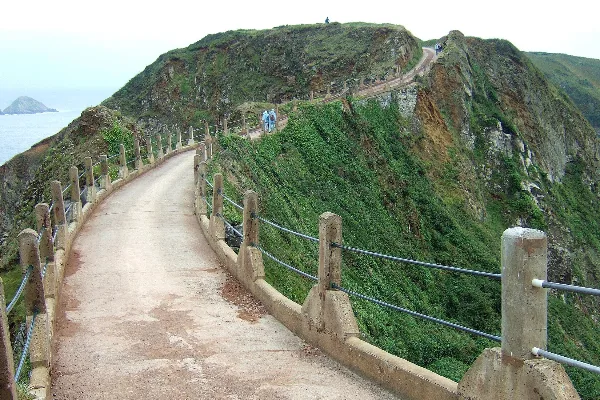
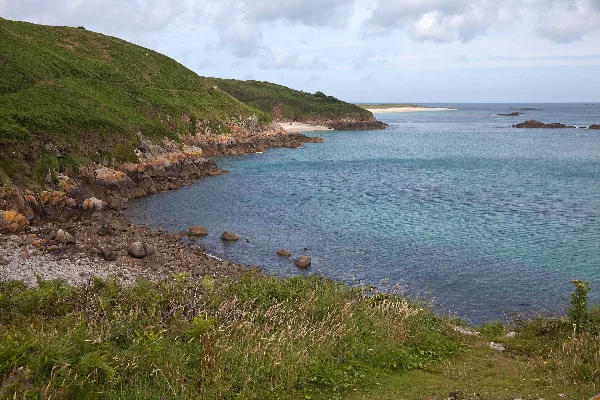
Guernsey, the second-largest Channel Island (63 km²), is a British Crown dependency nestled in the heart of the English Channel, 50 km from the Normandy coast. Victor Hugo lived here in exile for 15 years (1855–1870) and wrote Les Misérables in his house in Saint Peter Port, now a museum. Saint Peter Port, its capital with colourful Georgian façades overlooking a lively yacht harbour, is one of the most beautiful port towns in the British Isles. The island offers spectacular cliffs to the south, fine sandy beaches such as Cobo Bay and Vazon Bay to the west, and unspoilt nature. The Bailiwick of Guernsey also includes the small islands of Alderney, Sark and Herm, reachable by boat from Guernsey. Sark, with no cars or paved roads, is one of the last refuges of medieval life in Europe.
A bailiwick, not a county
Guernsey is not part of the United Kingdom and never joined the European Union. It is a Crown Dependency with its own parliament, its own laws and its own currency — the Guernsey pound, pegged to sterling but not accepted in British shops, so spend it before you leave. Like Jersey, it is a surviving fragment of the Duchy of Normandy, which is why the parishes have French names and the old island language, Guernesiais, is Norman.
Victor Hugo spent fifteen years of exile here, from 1855 to 1870, and wrote Les Misérables at Hauteville House in Saint Peter Port. The house has belonged to the City of Paris since 1927 and reopened in 2019 after a full restoration — the interiors Hugo designed himself, dense, dark and strange, are the single best thing to see on the island.
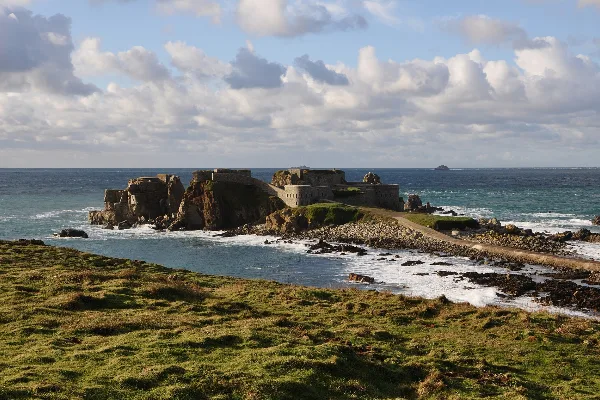
The Bailiwick is more than one island. Herm is car-free and twenty minutes away by boat. Sark, larger and equally car-free — transport is by tractor, bicycle and horse — was named the world's first Dark Sky Island in 2011. Alderney sits further north with its own airport and a coastline of Victorian forts.
May to September
The climate is mild and among the sunniest in the British Isles, but the sea stays cool at 16–18 °C in summer. The season runs from May to September; May and June give the longest days, the cliff paths in flower and fewer people than August. Check the tide tables before any walk on the foreshore — Guernsey's tidal range is among the largest in the world, and the sea comes back fast.
The new entry rule, and the table
⚠️ Entry requirements changed on 23 April 2026. Non-visa nationals travelling directly to the Bailiwick from outside the Common Travel Area — including EU citizens — now need an Electronic Travel Authorisation, applied for online in advance, valid two years. A valid passport is required: national identity cards are no longer generally accepted. The one exception is narrow and temporary — French nationals on a same-day return ferry trip from Normandy or Brittany may still use an ID card until the end of 2026, with no onward travel to the UK or Jersey. Check the official rules before booking, as the fee and the terms have already changed once.
Guernsey is reached by ferry from Saint-Malo, Diélette or Portsmouth, or by air. A car is not necessary: the island is roughly ten kilometres by seven, buses are cheap and frequent, and the cliff path along the south coast is the best way to see it. At the table, look for ormers — a local abalone, gathered under strict licence and served in a long-cooked stew — Guernsey Gâche, the fruit bread, and the exceptionally rich milk of the island's own breed of cow.
Essentials & your questions
| Capital | Saint Peter Port |
|---|---|
| Area | 63 km² |
| Language | English / Guernesiais |
| Currency | Guernsey pound (= GBP) |
| Visa | Passport + ETA required (since 23 Apr 2026) |
| Best time to visit | June – August |
When is the best time to visit Guernsey?
The best time to visit is June – August. The weather is ideal for outdoor activities.
Do I need a visa to visit Guernsey?
A valid passport and an Electronic Travel Authorisation (ETA) are required for EU nationals since 23 April 2026. Always check current entry requirements before travelling.
How do I get to Guernsey?
Check the air and sea connections from your departure point — see the On the ground section above.
What are the highlights of Guernsey?
Victor Hugo, wild cliffs and an island way of life. Guernsey, the second-largest Channel Island (63 km²), is a British Crown dependency nestled in the heart of the English Channel, 50 km from the...
Since 23 April 2026, EU nationals need a UK Electronic Travel Authorisation (ETA) to enter the Bailiwick of Guernsey. It cost 16 pounds at launch and has been raised to 20: check the current fee on the official site before paying. French nationals on a same-day return by certain direct ferry services may still travel on a national identity card.
Elsewhere in the same archipelago: Sark, the car-free island, Herm, twenty minutes away by boat, and Alderney, the closest to the French coast. To choose between them, read our comparison Which Channel Island to choose?
← Discover all the islands