⚠️ Timetables, opening hours, prices and access conditions may change without notice, for reasons beyond our control (season, weather, decisions by operators, venues or local authorities). Before every trip, check the information with the relevant authorities and service providers. Entry requirements and local rules (reserves, quotas) are subject to the same caveat.
Ireland is first and foremost an island, and an island surrounded by islands: several dozen are still inhabited along the Atlantic coast. They have kept what the mainland has sometimes lost — Irish spoken every day, monasteries clinging to cliffs, car-free villages and puffin colonies. This page introduces the main island through its departure ports, and each of the islands worth the journey; Achill, Valentia and the Skelligs, Inishbofin and the Aran Islands also have their own full pages.
The islands
Eleven islands, one by one
From Donegal to West Cork, no two Irish islands are alike: some are reached by car over a bridge, others take an hour by boat; Irish is spoken on some, and you may come across puffins or the ruins of a monastery. The table helps you choose; the profiles describe each island in detail.
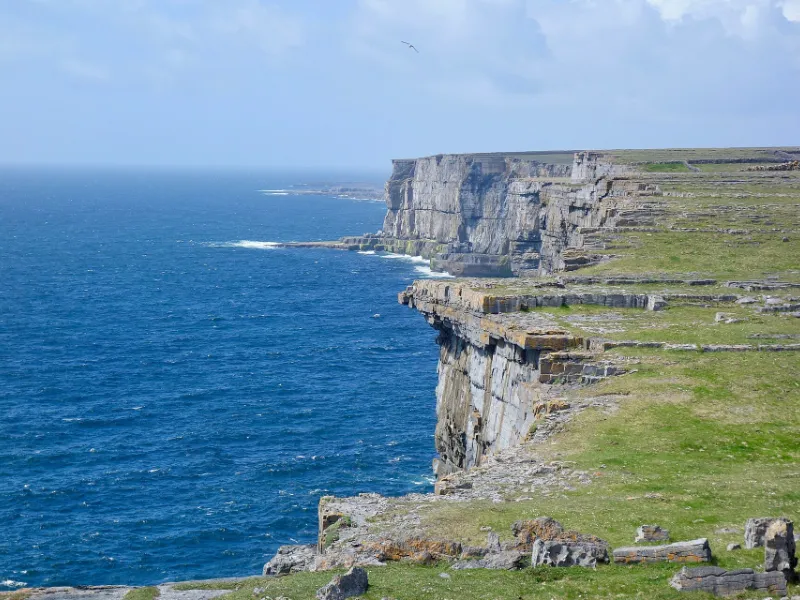
Three limestone islands at the mouth of Galway Bay — Inis Mór, Inis Meáin and Inis Oírr — where Irish is the everyday language. On Inis Mór, the fort of Dún Aonghasa stands on a cliff nearly a hundred metres high; everywhere, thousands of dry-stone walls divide up the fields. You can hire a bike at Kilronan harbour, or tour the island by minibus with a local.
Who it's for
Culture lovers, cyclists, walkers
How long
1 to 3 days
Getting there
Ferry from Rossaveal (≈ 40 min) or Doolin; flight from Connemara (≈ 10 min)
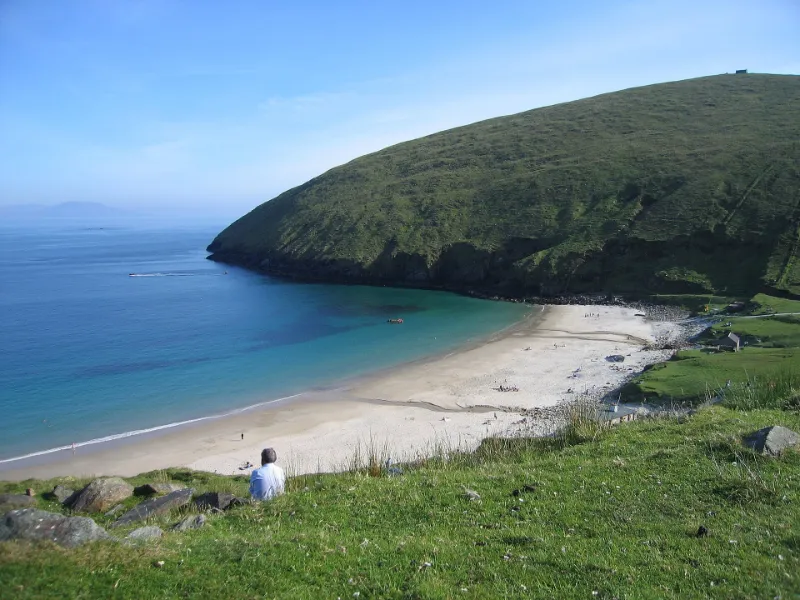
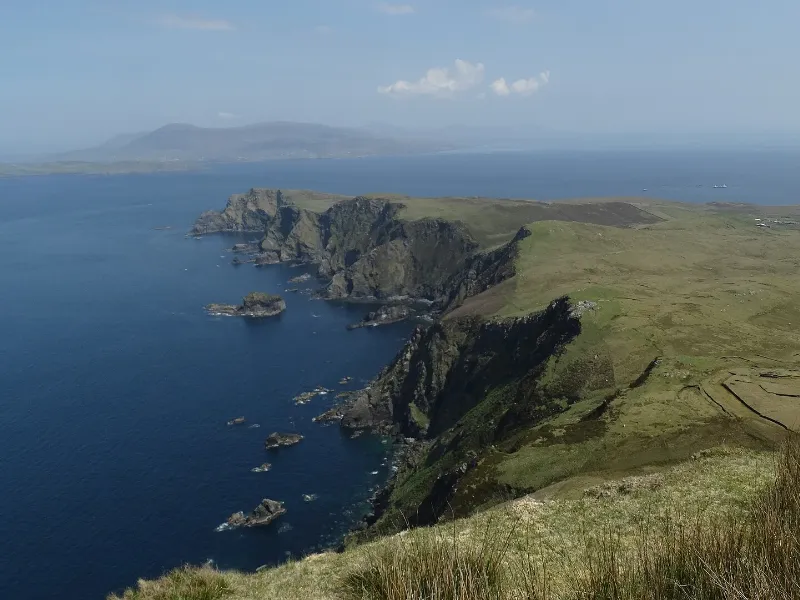
Ireland's largest island is reached by car over a bridge. The Atlantic Drive leads to Keem Bay, a turquoise cove at the foot of the mountains; in the north-west, the Croaghaun cliffs plunge 600 metres into the ocean. Four beaches hold the Blue Flag in 2026, and the Great Western Greenway lets you arrive by bike from Westport.
Who it's for
Families, surfers, walkers, cyclists
How long
2 to 4 days
Getting there
By car over the Achill Sound bridge; train to Westport then bus
Don't miss
Keem Bay, the deserted village of Slievemore, the Greenway by bike
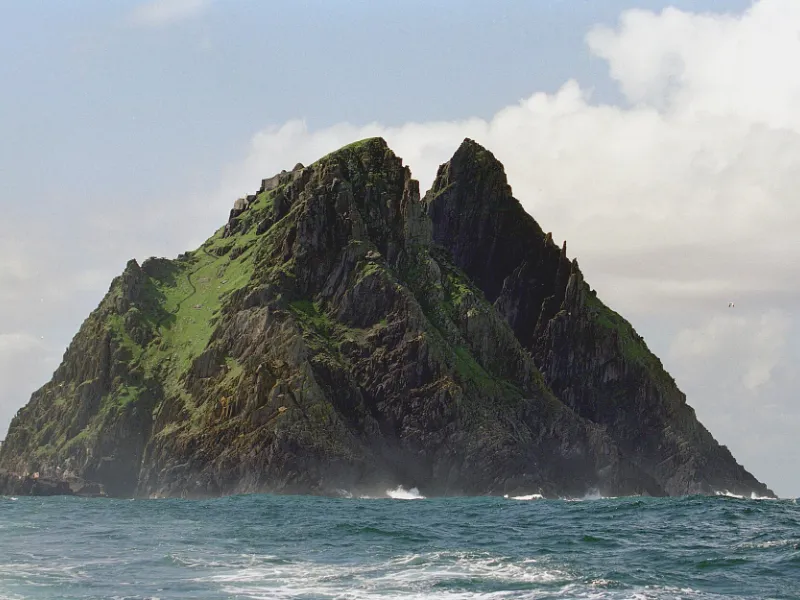
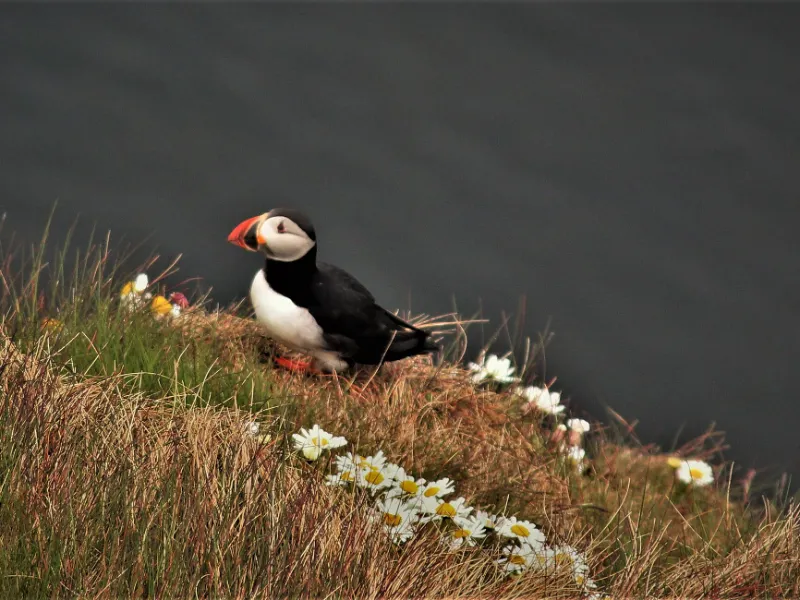
Valentia is reached by a bridge from Portmagee; this is where the boats leave for Skellig Michael, a rock crowned by an early medieval UNESCO-listed monastery at the top of 618 steps. Puffins nest there from April to mid-August. On Valentia: Geokaun, the tetrapod footprints and the station of the first transatlantic cable.
Who it's for
History buffs, photographers, Star Wars fans
How long
2 to 3 days, including a spare day for the sea
Getting there
Bridge from Portmagee; Reenard Point–Knightstown car ferry from April to October
Don't miss
Landing on Skellig Michael (mid-May to late September), Geokaun, the puffins
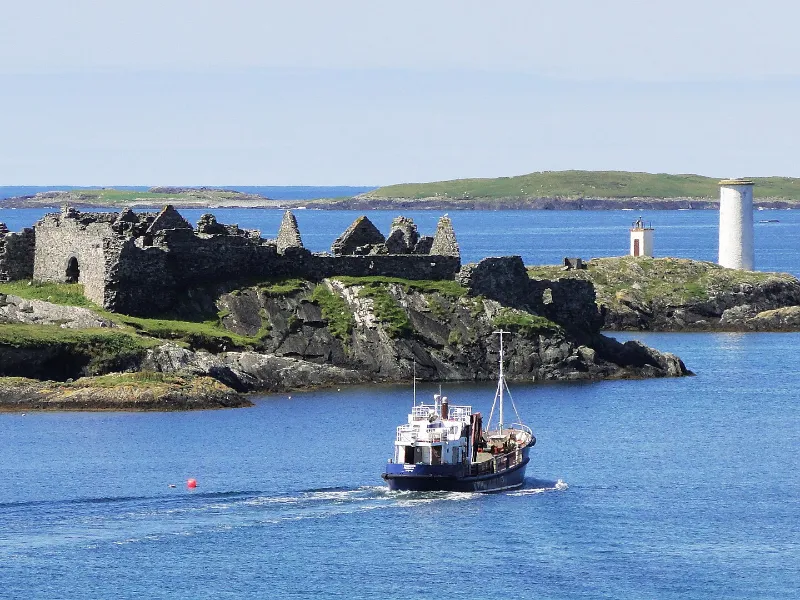
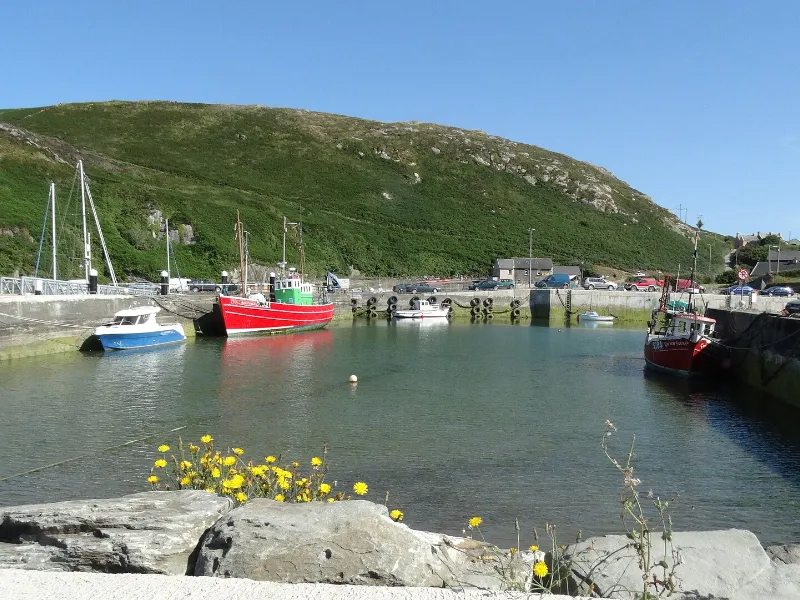
Thirty minutes by ferry from Cleggan, in Connemara, an island of 12 km² and 184 inhabitants that you explore on foot or by bike. Cromwell's fort at the harbour mouth, the ruins of St Colmán's monastery, white sandy beaches, seals and corncrakes; in the evening, traditional music in the pubs.
Who it's for
Couples, walkers, lovers of peace and quiet
How long
1 to 3 days
Getting there
Ferry from Cleggan (≈ 30 min), all year round
Don't miss
The Westquarter loop, Cromwell's Barracks, a music night in the pub
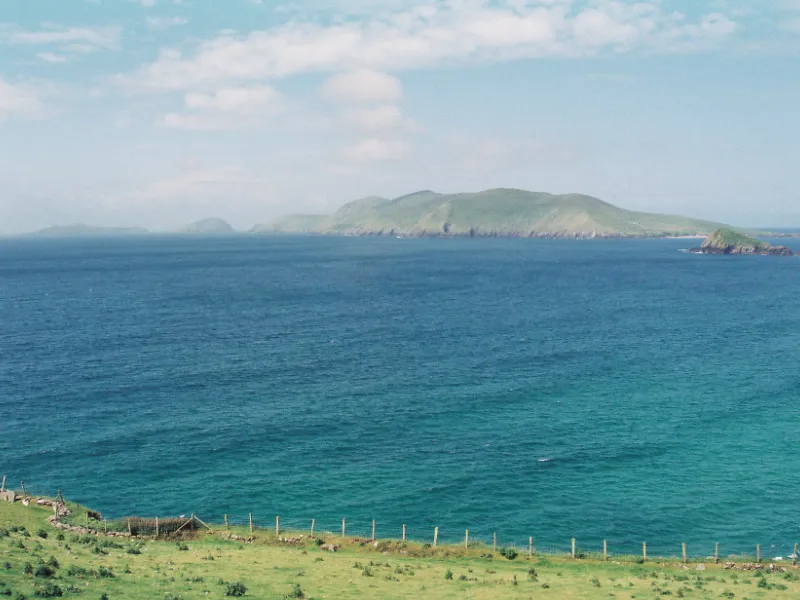
At the tip of the Dingle Peninsula, Great Blasket was evacuated in 1953; it once had up to 175 inhabitants and gave Ireland several great writers in the Irish language. You land by tender to walk among the ruined houses and watch one of the largest grey seal colonies on the Atlantic coast. A few restored cottages, without electricity, offer overnight stays.
Who it's for
Readers, walkers, lovers of wild places
How long
A day
Getting there
Boat from Dunquin (20 to 30 min) or Dingle, from April to October
Don't miss
The Blasket Centre in Dunquin, walking on Great Blasket, the seals
Cape Clear (Oileán Chléire) is Ireland's southernmost Gaeltacht island: 110 inhabitants, a bird observatory staffed since 1959 and a view of the Fastnet lighthouse. Closer to Baltimore, Sherkin hides a medieval Franciscan friary and two lovely beaches, Abbey Strand and Silver Strand.
Who it's for
Birdwatchers, walkers, Irish-language enthusiasts
How long
1 to 2 days
Getting there
Ferry from Baltimore (≈ 45 min to Cape Clear, 10–15 min to Sherkin)
The largest island in Clew Bay, Clare Island rises to 462 m and was the stronghold of Grace O'Malley, the pirate queen: her castle guards the harbour, and the Cistercian abbey preserves rare medieval ceiling paintings. Further out, Inishturk and its 56 inhabitants offer one of the most remote island experiences in Ireland.
Who it's for
Walkers, history lovers, travellers seeking remoteness
How long
1 to 2 days
Getting there
Ferry from Roonagh, near Louisburgh (10 to 25 min; ≈ 50 min to Inishturk)
Don't miss
The summit of Knockmore, the painted abbey, Clare Island lighthouse
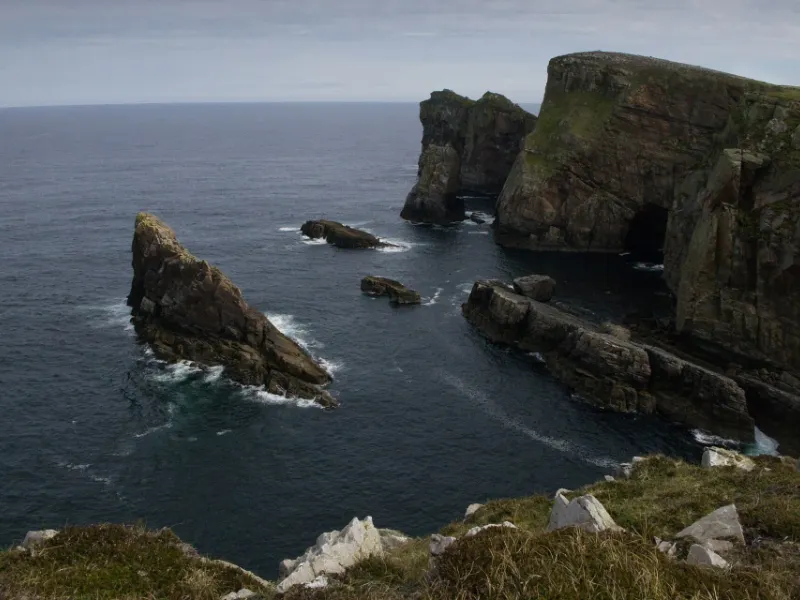
11 km offshore, Tory (Toraigh) is Ireland's most remote inhabited island: 141 inhabitants, a "king" elected by the islanders, a 12th-century tau cross and a school of painters born in the 1950s. Closer and larger, Arranmore is 15 minutes by car ferry from Burtonport.
Who it's for
Those curious about Gaelic culture, walkers, art lovers
How long
1 to 2 days
Getting there
Foot-passenger ferry from Magheroarty (≈ 45 min); car ferry from Burtonport (≈ 15 min)
Don't miss
Tory's tau cross, the painters' gallery, the Arranmore coastal loop
The only inhabited island in Northern Ireland, Rathlin is home to the province's largest seabird colony: puffins, guillemots and razorbills, visible from late April to early July from the RSPB's West Light Seabird Centre, 7 km from the harbour. It is 25 to 40 minutes from Ballycastle. Note: you are in the United Kingdom, so you need a passport, an ETA and pounds sterling.
Who it's for
Birdwatchers, families, walkers
How long
A day, or a night on the island
Getting there
Ferry from Ballycastle (25 to 40 min), all year round
Don't miss
The West Light puffins, the Boathouse Visitor Centre, the Mill Bay seals
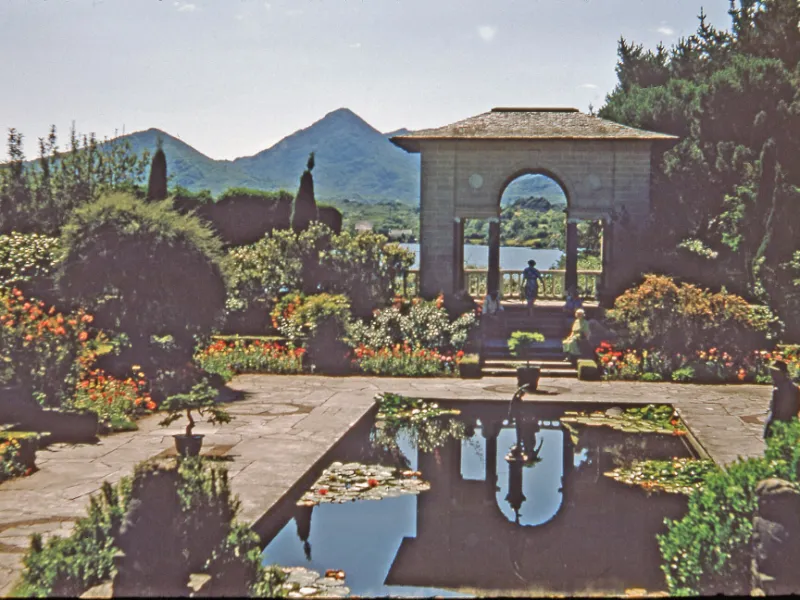
In Glengarriff harbour, a 15-hectare islet turned into an acclimatisation garden in the early 20th century: an Italian garden, a Grecian temple, a Martello tower and subtropical plants, thanks to the mild climate of Bantry Bay. The 15-minute crossing passes a seal colony.
Who it's for
Garden lovers, families
How long
Half a day
Getting there
Boat from Glengarriff (≈ 15 min), from March to November
Don't miss
The Italian garden, the view from the Martello tower, the seals
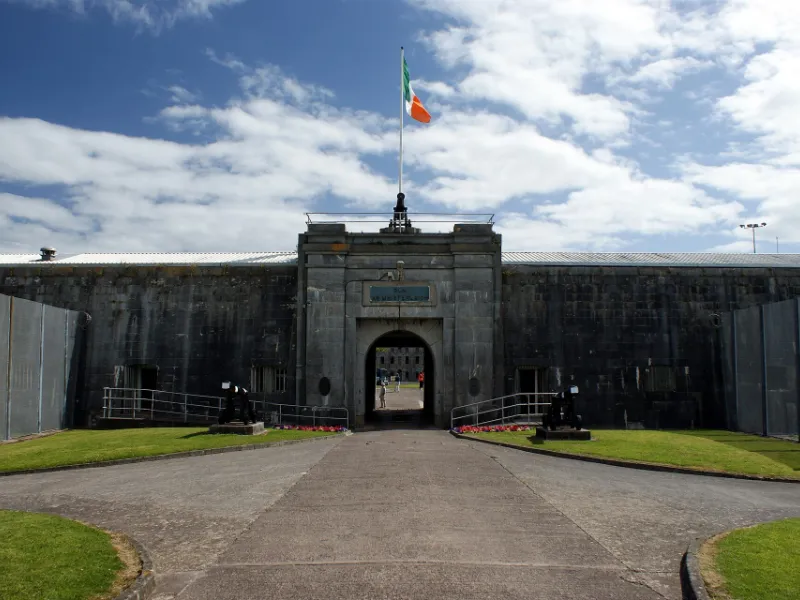
In Cork Harbour, Spike Island is dominated by Fort Mitchel, an 18th-century fortress that served as a prison from 1847 to 2004. Open to the public since 2016, it can be visited with storytelling guides, by day or on night tours. You set off from Cobh, the Titanic's last port of call, 24 minutes by train from Cork.
Who it's for
Families, history lovers
How long
Half a day, with Cobh
Getting there
Ferry from Cobh (10 to 15 min)
Don't miss
The guided tour of the fort, the ramparts, the Cobh Heritage Centre
Between the islands
Reaching the islands
By road: Achill (Achill Sound bridge) and Valentia (Portmagee bridge, or the car ferry from Reenard Point from April to October) can be reached by car.
By boat, on foot: most of the small islands are reached without a car — Inishbofin from Cleggan (30 min), Clare Island from Roonagh (10 to 25 min), Cape Clear from Baltimore (45 min), Great Blasket from Dunquin (20 to 30 min), Tory from Magheroarty (45 min), Garinish from Glengarriff (15 min), Spike Island from Cobh (15 min).
With your car: Arranmore has a car ferry from Burtonport (15 min); Rathlin has a ferry that takes a few vehicles by reservation.
Aran: ferries from Rossaveal (40 min) or Doolin, and small planes from Connemara (10 min).
Rathlin is in the United Kingdom: a passport and a UK Electronic Travel Authorisation (ETA) are required, and pounds sterling are used on the island.
Our tip: crossings are cancelled in rough weather; always keep a day in reserve before a return flight or ferry.
Understanding the destination
A jagged coastline, two countries, one culture
The islands are concentrated along the Atlantic seaboard, from Donegal in the north to West Cork in the south. The largest are linked by a bridge (Achill, Valentia); the others are reached by boat from a small harbour: Cleggan for Inishbofin, Roonagh for Clare Island, Baltimore for Cape Clear, Dunquin or Dingle for the Blaskets. Some of them belong to the Gaeltacht, the area where Irish is the everyday language.
Rathlin, in the north-east, is a case apart: it lies in Northern Ireland, and therefore in the United Kingdom. You pay in pounds sterling, and a passport with a UK Electronic Travel Authorisation (ETA) is required, even when coming from Dublin. Everywhere else, you are in the Republic of Ireland, in the European Union, using the euro.
When to go
May to September, for the boats and the birds
The island season runs from May to September: this is when all the boats are running, when the gardens of Garinish are in bloom and when you can land on Skellig Michael (mid-May to late September, depending on the sea). Puffins can be seen from April to early August, on the Skelligs as on Rathlin.
The climate is mild but changeable: you can get four seasons in a single day, and crossings are cancelled in rough weather, especially in winter. Allow a day's margin before a return flight, and pack rain gear whatever the season.
Getting around
A car for the coast, a boat and a bike for the islands
To link the departure ports, a car is still the simplest option: you drive on the left, and the coastal roads are narrow. Bus Éireann and Citylink buses nonetheless serve most ports from Dublin, Galway or Cork. On the small islands, you get around on foot or by bike, often hired as you step off the boat.
The islands have little accommodation: book early for July and August, or stay in the departure port and make a day trip. Many boats carry foot passengers only; cars stay on the quay.
Practical information
The essentials
Getting there
Ferry from Roscoff or Cherbourg (Brittany Ferries, Irish Ferries), or a flight from Paris → Dublin, Shannon or Cork
Best season
May to September, when all the boats are running
Currency
Euro (EUR); pound sterling (GBP) in Northern Ireland (Rathlin)
Language
English and Irish (Gaelic), the everyday language on the Gaeltacht islands
Entry requirements
ID card or passport for the Republic of Ireland; passport + UK ETA for Northern Ireland
Frequently asked questions
Your questions answered
Which Irish island should I choose for a first trip?
The Aran Islands for Gaelic culture and stone forts, Achill for a large island you can drive to, Valentia to combine the island with a trip to the Skelligs, Inishbofin for a small, quiet, car-free island.
Do I need a passport for Ireland?
Not for the Republic of Ireland: a valid ID card is enough for French citizens. For Northern Ireland (Rathlin, Ballycastle), which is part of the United Kingdom, you need a passport and an Electronic Travel Authorisation (ETA).
How do I get to Ireland from France?
By ferry from Roscoff (to Cork, about 14 h) or Cherbourg (to Rosslare or Dublin), with your car; or by air from Paris to Dublin, Shannon or Cork, then by car or bus to the departure port.